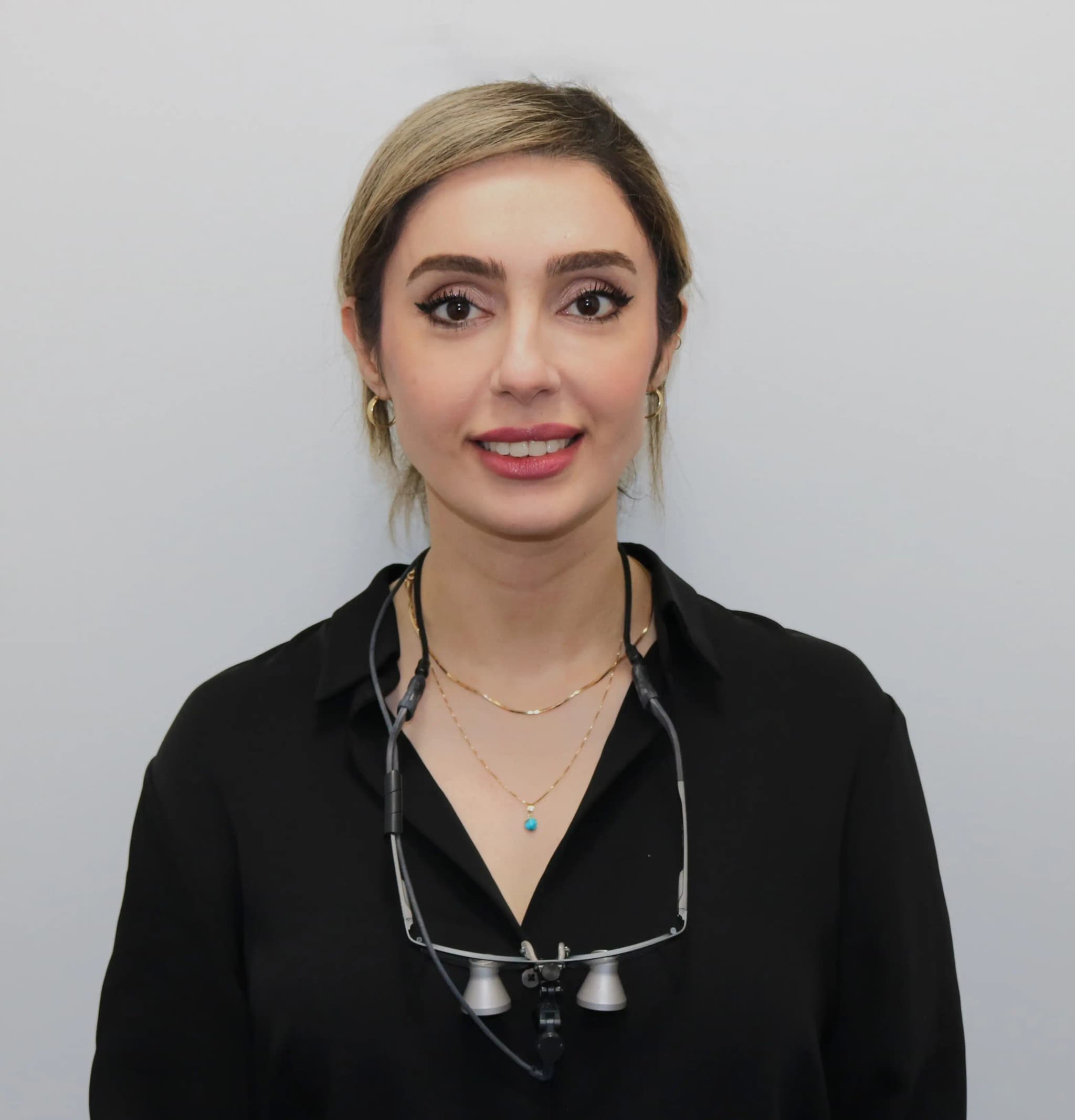
Written by Dr. Mahtab Ghazvini, DMD (University of Manitoba), principal dentist at Spire Dental Care Langley. Dr. Ghazvini has treated families across Langley, Surrey, and the Fraser Valley since 2019 and is a registered Canadian Dental Care Plan provider.
Last reviewed: May 2026
Key Takeaways
- A returning checkup with X-rays and a cleaning commonly runs $350-$450 or more in BC; a comprehensive new-patient visit is around $595
- Fillings are charged per tooth surface (about $175 for one surface up to $400+ for larger ones); crowns run $1,000-$1,700 and extractions $150-$600 by complexity
- The BC Fee Guide is a suggestion, not a rule, so every office sets its own fees, and many charge at or above the guide
- The CDCP rarely covers your full bill: most BC offices bill at the higher BC Fee Guide rather than the CDCP's lower federal grid, so you almost always pay an out-of-pocket balance, even in the lowest-income tier. Treat it as a discount, not free care
- Ask for a written estimate before treatment, and use insurance, CDCP, and regular checkups to keep long-term costs down
Wondering what a dentist actually costs before you book? It is one of the most common questions we hear, and the honest answer is that prices in Langley follow the same provincial guideline every BC office references, but no two clinics charge exactly the same. This guide breaks down real 2026 costs for the treatments people ask about most, explains why the numbers vary, and shows how the Canadian Dental Care Plan and insurance change what you actually pay.
How much does a dentist cost in Langley, BC?
For most routine visits, expect roughly $350-$450 or more for a returning checkup with X-rays and a cleaning, and about $595 for a comprehensive new-patient exam that includes a full set of X-rays (multiple periapical and bitewing images plus a panoramic), a cleaning, and fluoride, based on the 2026 BC Dental Association (BCDA) Suggested Fee Guide. Individual treatments are priced by complexity: a single-surface filling starts near $175, while a crown runs $1,000 or more. Here is how the common services break down for 2026:
| Service | Typical cost in BC (2026) | What's included |
|---|---|---|
| New-patient exam + X-rays + cleaning | ~$595 | Complete exam, 4 periapical + 4 bitewing X-rays, panoramic X-ray, scaling, polish, fluoride |
| Returning (recall) checkup + X-rays + cleaning | $350-$450+ | Exam, recall X-rays, and scaling; more scaling units (e.g. for gum disease) cost more |
| Emergency / limited exam + X-rays | ~$110-$125 | Focused exam for one problem, plus a couple of X-rays |
| Filling (composite), charged per surface | $175-$402 | BCDA 2026: 1 surface $175, 2 surfaces $214, 3 surfaces $264, 4 surfaces $326, 5 surfaces $402 |
| Crown | $1,000-$1,700 | Varies by material and lab fee |
| Simple extraction | $150-$300 | Per tooth; baby teeth are often less |
| Surgical / wisdom-tooth extraction | $250-$600 | Per tooth, by complexity |
| Root canal | Varies by tooth | Front teeth cost less than multi-canal molars |
| Dentures / full-mouth cases | Varies widely | Partial vs. complete; multiple extractions priced separately |
These figures are based on the 2026 BCDA Suggested Fee Guide, which is a guide only; many offices charge at or above it. Fillings are billed per tooth surface, so a deep, multi-surface filling costs more than a small one. Costs also differ for children (baby teeth) and for complex cases like full-mouth extractions or dentures. Your exact cost depends on the tooth and treatment, which is why we give every patient a written estimate before any work begins.
Why do dental costs vary between offices?
Because the BC fee guide is a suggestion, not a rule. The BCDA states plainly that "dentists are not required to follow the guide or any fee schedule" and that the cost of treatment "varies by dental practice, location and the individual needs of the patient." So two Langley offices can quote different prices for the same procedure code and both be entirely within their rights.
In our Langley practice, the new-patient question we hear most is some version of "what will today actually cost?" The variation usually comes down to a few honest factors: the materials a clinic uses, whether a dental lab is involved (crowns, bridges, and dentures carry lab fees), the time and complexity of your specific case, and the office's own overhead. None of that shows up in a single advertised number, which is why a written estimate matters more than a sticker price. If a quote ever surprises you, ask the office to walk you through the procedure codes; a reputable practice will.
What does the Canadian Dental Care Plan (CDCP) cover?
For eligible patients, the CDCP helps with the cost of routine care, but it almost never covers your full bill, so plan to pay an out-of-pocket portion even if you qualify for the most generous tier. The plan covers exams, cleanings, X-rays, fillings, root canals, gum treatment, and dentures. Two things shape what you pay.
1. Your income-based co-pay. Based on adjusted family net income, the CDCP sets your co-pay at 0% (under $70,000), 40% ($70,000 to $79,999), or 60% ($80,000 to $89,999). But that percentage applies only to the CDCP's own fee schedule, not to your dentist's actual fee.
2. Balance billing, the part most patients miss. The CDCP reimburses on its own federal fee grid, which sits below the BC Dental Fee Guide. In practice, very few BC offices bill at CDCP rates; most follow the higher BC guide and charge more. So you will almost always owe the difference between your dentist's fee and what the CDCP pays, even in the lowest-income tier where the co-pay percentage is zero. As the Government of Canada puts it: "if your oral health care provider charges more than the CDCP fees, you will be responsible for paying the difference."
Treat the CDCP as a meaningful discount, not free dental care. Before any treatment, ask your office exactly what the CDCP will reimburse and what you will owe directly. To qualify in 2026 you must be a Canadian resident for tax purposes, have filed your most recent tax return, have an adjusted family net income under $90,000, and not have access to private dental insurance. In our experience, the patients most caught off guard are the ones who assumed the CDCP would cover everything, so we go over your estimated coverage and out-of-pocket balance before we begin. For a fuller walkthrough, see our guide to the Canadian Dental Care Plan.
How does dental insurance work in BC?
If you have private dental insurance, your plan typically covers a percentage of routine care, often 80-100% of preventive visits and 50-80% of restorative work like fillings and crowns, up to an annual maximum. The exact split depends on your specific policy, so it is worth checking your coverage before a larger treatment.
The bigger day-to-day difference is direct billing. With direct billing, the office submits the claim to your insurer for you, so you pay only your portion at the visit instead of paying the full amount and waiting weeks for reimbursement. We offer direct billing to the CDCP and major insurers at our Langley family dental office. For most patients it turns an intimidating total into a manageable co-pay.
How can you lower your dental costs?
The single biggest lever is prevention. The patients who spend the least over the years are almost always the ones who come in for regular checkups. Catching a small cavity and treating it with a single-surface filling (about $175) is far cheaper than waiting until it needs a root canal and a crown. A few practical ways to keep costs down:
- Keep up with preventive checkups and cleanings so small problems are caught early and cheaply
- Use your CDCP or insurance coverage before the benefit year resets, since unused annual maximums do not carry over
- Ask for a treatment plan with estimates so you can sequence non-urgent work across benefit years
- Don't delay a painful tooth: an emergency visit for a small problem costs far less than treating an abscess later
- Ask about payment options for larger treatments
What affects the cost of a specific treatment?
Within any single procedure, a handful of factors move the final number. For a filling, it is the size of the cavity and how many tooth surfaces are involved. For a crown, it is the material (all-ceramic versus metal-based) and the lab fee. For an extraction, it is whether the tooth is simple to remove or impacted and surgical, like many wisdom teeth. And across the board, your overall oral health matters: a mouth that needs gum treatment first will cost more than one that is ready for the procedure today. This is exactly why a personalized estimate beats any price chart, including this one.
Book a visit or request an estimate with our team at our Langley dental office, and we'll review the costs and your CDCP or insurance coverage with you before any treatment begins. You can also read what local families say on our patient reviews page.
Sources
- British Columbia Dental Association. "2026 Suggested Fee Guide (Abbreviated, Patient Version)" and "Cost of Dentistry." bcdental.org (retrieved May 2026)
- Government of Canada. "Canadian Dental Care Plan: What services are covered" and "Do you qualify." canada.ca (retrieved May 2026)